Skip to content

AI Platform Architecture & Implementation

Build a production-ready AI platform on AWS —engineered for scalability, security, and operational control.
We design and implement the cloud foundations that power AI-driven products, integrating Kubernetes, DevOps, governance, and observability into a structured platform architecture.

human-head-brain-structure-line-connect-electronic-circuits-components-technology-ai-concept copy (1)

Engineering the Foundation Behind AI-Driven Platforms

AI capabilities are rapidly becoming part of modern digital products. Long-term success depends not only on the model itself, but on the architecture that supports it.

Bion designs and implements production-ready AI platforms on AWS — combining cloud architecture, Kubernetes, DevOps, security, and observability into a cohesive engineering foundation.

AI becomes a structured capability within your platform, integrated into your cloud ecosystem and delivery processes.

Built for Teams Designing AI as a Core Capability

This service supports organisations that are:

  • Designing AI-native products from the ground up

  • Embedding AI capabilities into existing digital platforms

  • Introducing generative AI into production environments

  • Scaling AI workloads on AWS

  • Structuring AI delivery through modern cloud and DevOps practices

Whether you are launching a new AI platform or evolving an existing product, the underlying architecture must support performance, scalability, and disciplined delivery from the start. AI products require platform thinking from day one — not after scale introduces risk.

Our AI platform architecture on AWS ensures scalable infrastructure, structured delivery, and long-term operational control.


Common AI Platform Challenges

Building AI capabilities is rarely limited by the model itself. Most production issues originate from platform design decisions.

Organisations commonly struggle with:

  • AI workloads that scale unpredictably under real demand

  • Rising token and infrastructure costs without clear visibility

  • Generative AI integrations that bypass governance boundaries

  • GPU-based workloads without structured autoscaling

  • AI features deployed outside established CI/CD workflows

  • Limited runtime visibility into model behaviour and performance

If these challenges sound familiar, the issue is not experimentation — it is platform architecture.


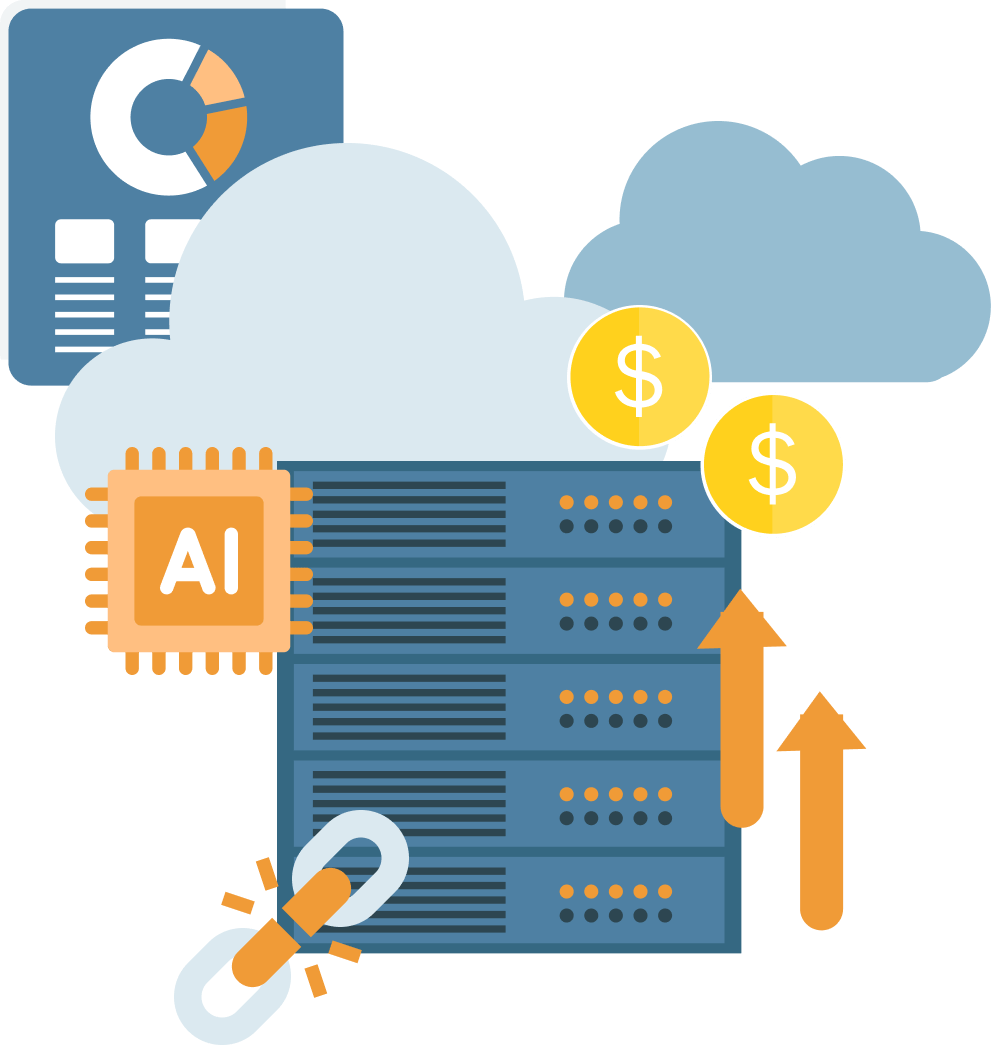
AI_Platform_Challenges

Trusted By

experian-logo
placecube-logo
insiderone-logo
humanoo-logo
sonantic-logo
moonfare-logo-2024
clearscore-logo
yemeksepeti-logo-1
newbury-digital-logo
moteefe-logo
rierino-logo
solvo-logo
locale-logo
payparc-logo
r8fin-logo
advanced-logic-analytics-logo
stratus-logo
arvato-logo
dan-logo
simplisales-logo
hurlinghamclub_logo
qubit-logo
netix-logo
bellevie-logo
roll-logo
merciv-logo
cci_logo
bitaksi_logo
warner_hotels_logo
ciceksepeti_logo
digital-planet-logo
bk-mobil-logo

Production AI Platform Architecture on AWS

1. AWS AI Platform Foundations

We architect secure and scalable AWS environments tailored for AI workloads:

  • Multi-account AWS structures

  • Secure networking and VPC design

  • IAM and least-privilege access models

  • Infrastructure as Code (Terraform / Terragrunt)

  • Environment separation (dev, staging, production)

  • Cost-aware architecture decisions

This establishes a controlled and production-aligned AI-ready cloud foundation.

2. Kubernetes-Based AI Infrastructure

For organisations requiring flexibility and scalability, Kubernetes becomes central.

We implement:

  • Production-ready Amazon EKS clusters

  • GPU-enabled node groups where required

  • Autoscaling strategies for inference workloads

  • Isolation between training and serving environments

  • Secure container supply chain practices

AI workloads operate within your broader platform architecture — aligned with your DevOps processes.

3. Generative AI & LLM Platform Integration

Amazon Bedrock and other large language model services introduce new architectural considerations.

We design integration patterns that ensure:

  • Secure API exposure

  • RAG-ready backend structures

  • Token and inference cost visibility

  • Data access governance

  • Hybrid architectures (managed services + containerised models)

Generative AI capabilities are embedded into your architecture with control and transparency.

4. Delivery-Aligned AI Infrastructure

AI infrastructure must follow engineering discipline.

We integrate AI workloads into:

  • CI/CD pipelines

  • Version-controlled infrastructure

  • Structured environment promotion

  • Rollback and recovery strategies

  • Secure artifact management

This enables teams to deliver AI-powered features consistently and reliably.

5. Observability & Operational Control

AI systems introduce new operational metrics:

  • Model latency and throughput

  • Infrastructure saturation

  • Queue depth and event-driven scaling

  • API performance impact

  • Infrastructure and inference cost behaviour

We implement full-stack visibility across infrastructure and application layers, ensuring AI workloads remain predictable and manageable in production.

How We Deliver AI Platform Engineering

Our engagements are structured around clarity, controlled execution, and long-term platform stability.

006-planning

Architecture & Platform Review

We review your AWS environment, application stack, and AI workload requirements to define a clear platform blueprint. This includes architecture boundaries, scalability considerations, and security alignment — establishing a structured foundation before implementation begins.

018-deployment

Platform Build & Integration

We design and implement the AI-ready infrastructure across AWS and Kubernetes, integrating Infrastructure as Code, generative AI services, and delivery workflows into a cohesive platform architecture.
AI becomes embedded within your engineering ecosystem rather than operating as a parallel layer.

022-technical Support

Operational Readiness & Stability

We ensure the platform is production-aligned through performance validation, security hardening, observability integration, and cost visibility. The result is a stable, scalable AI environment that supports continuous product evolution.

What a Structured AI Platform Enables

A properly engineered AI platform allows teams to:

  • Release AI-powered features through controlled pipelines

  • Scale inference predictably under variable demand

  • Maintain cost transparency across model and infrastructure layers

  • Introduce generative AI without weakening security posture

  • Operate AI workloads with full-stack observability

AI becomes a production capability — not a technical liability.

AI_Platform_AWS

Case Studies


Selected AI platform and infrastructure engagements where we have designed, implemented, or supported production-ready environments on AWS.

Each example reflects real-world AI delivery — from generative AI integration and Kubernetes-based inference platforms to secure, observable, and scalable AI infrastructure foundations.

These engagements demonstrate how AI capabilities can be embedded into structured cloud architectures with engineering discipline and operational control.

See more case studies across different industries and service areas.

Bion_AWS_Partner_2026


Ready to Structure Your AI Platform for Production?

If AI is becoming central to your product strategy, your platform architecture must evolve accordingly.

Book a technical strategy call to discuss your AI platform architecture on AWS, delivery model, and scalability approach.